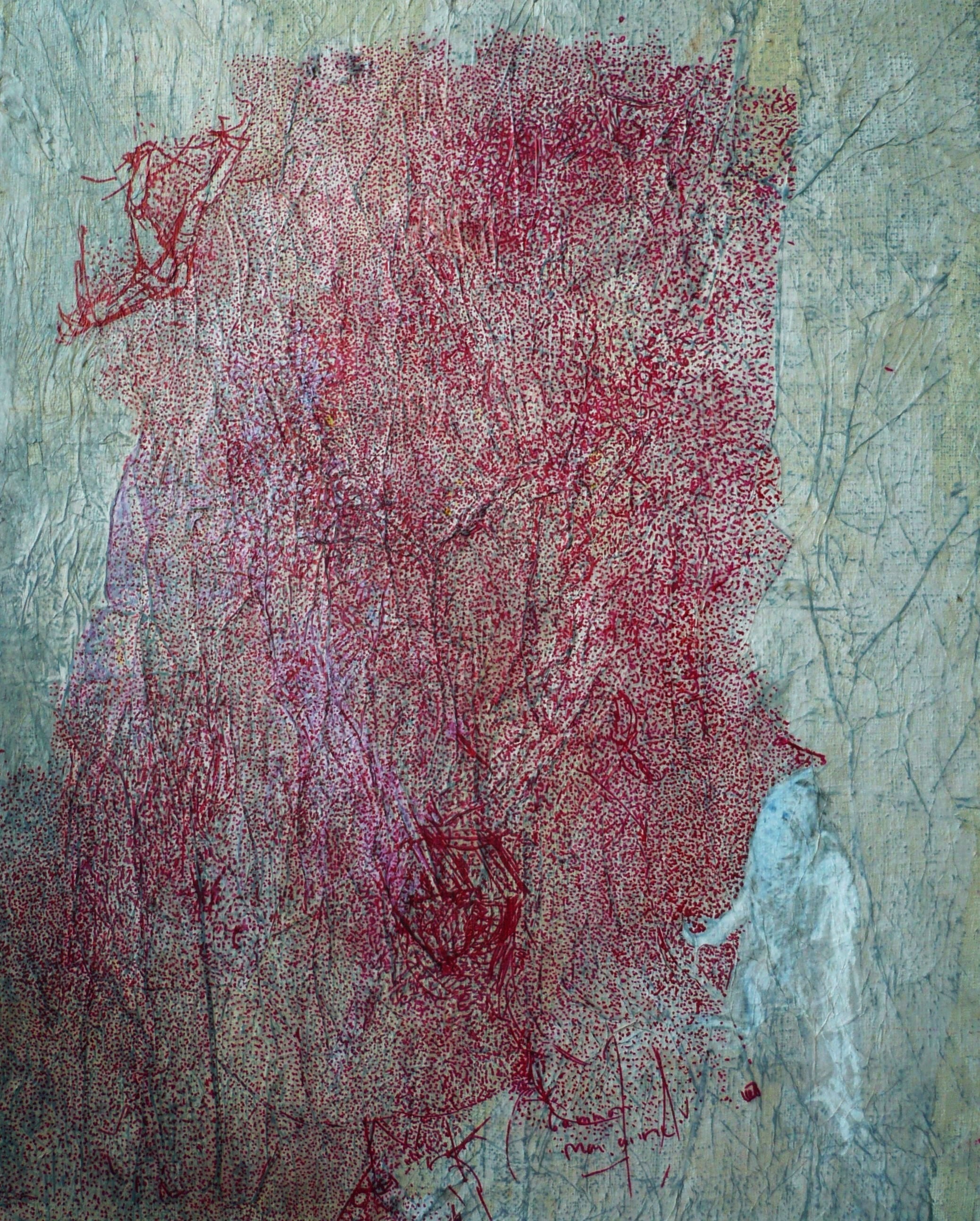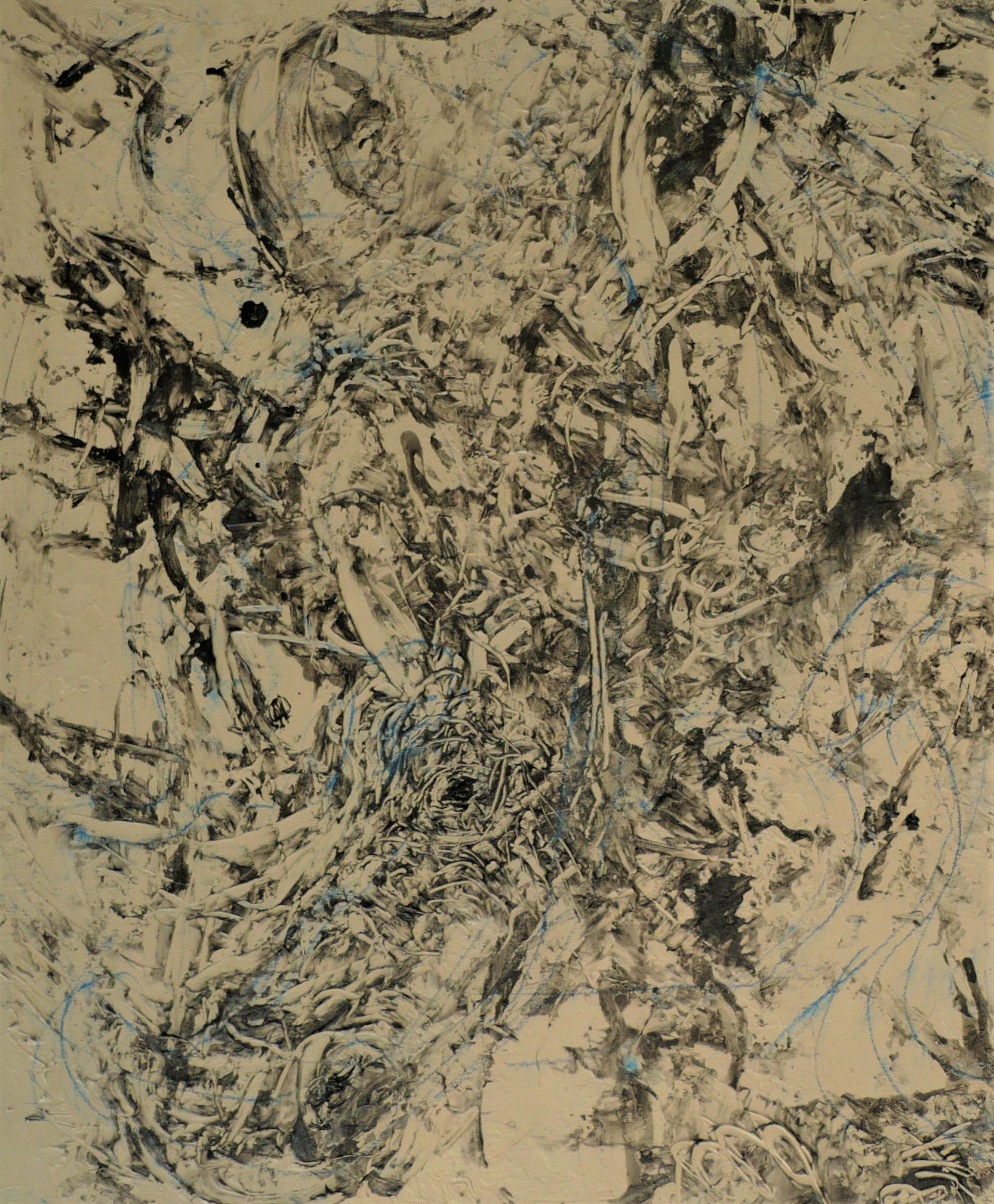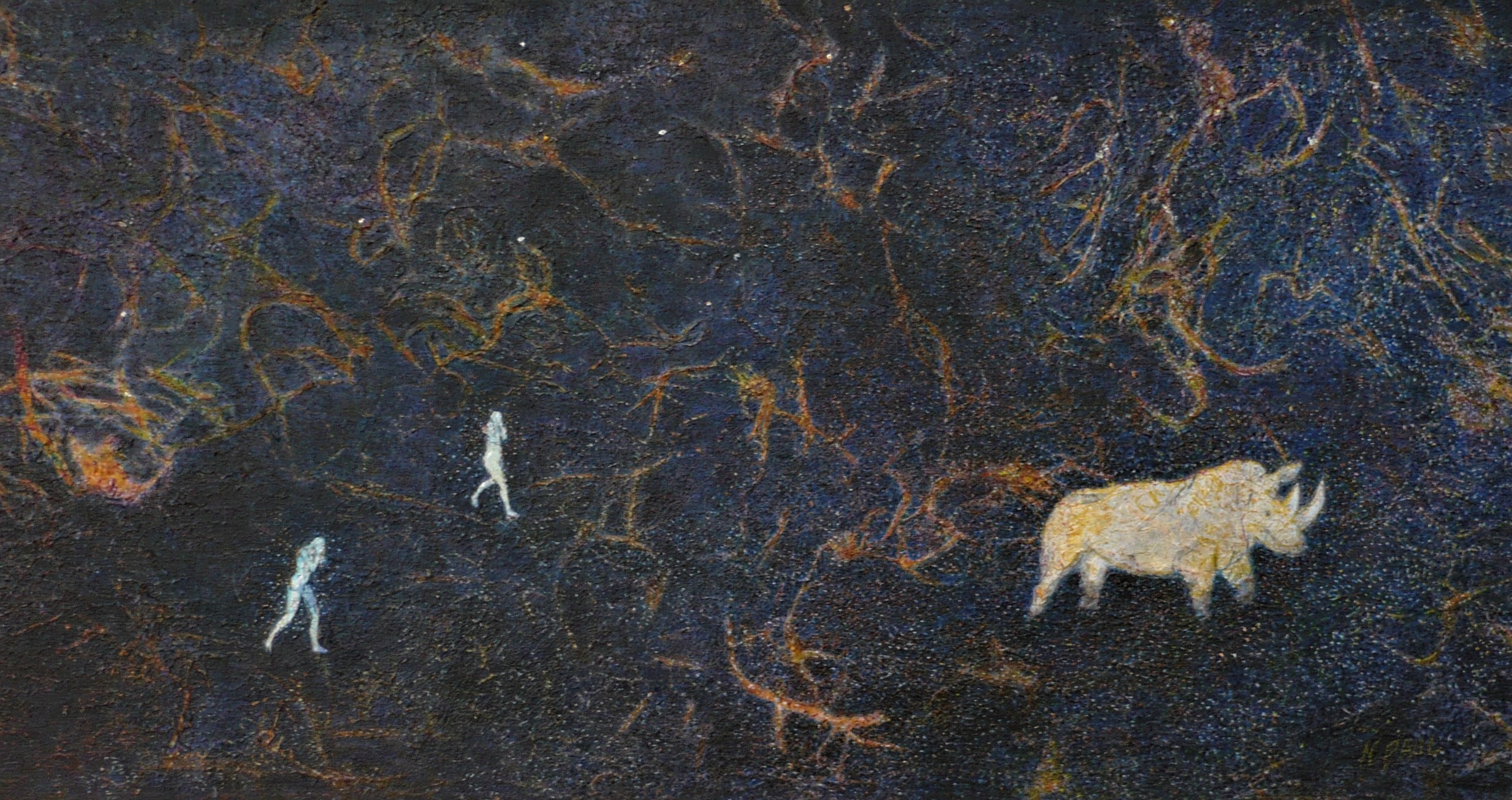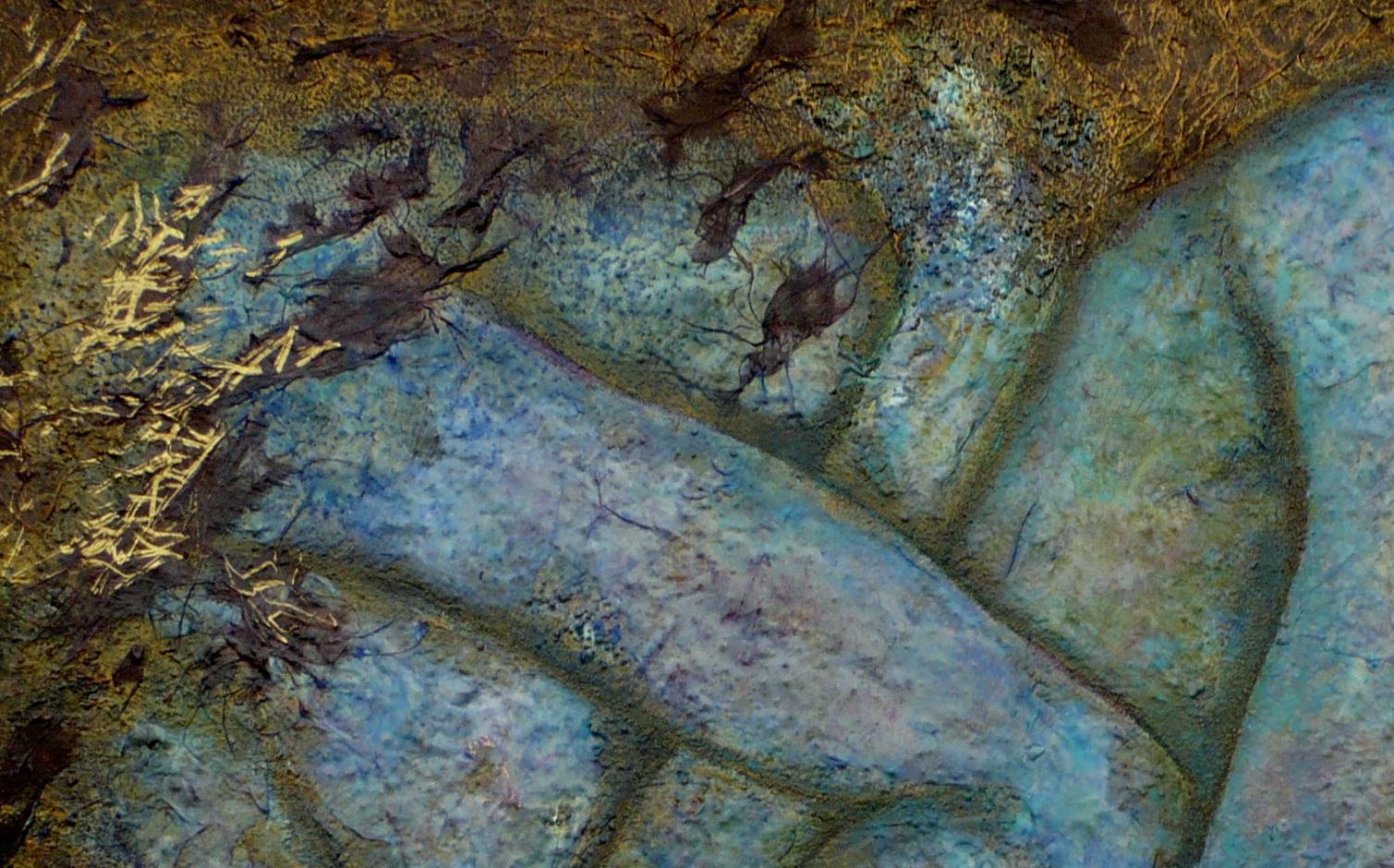
Breast Cancer: Treatment (I)

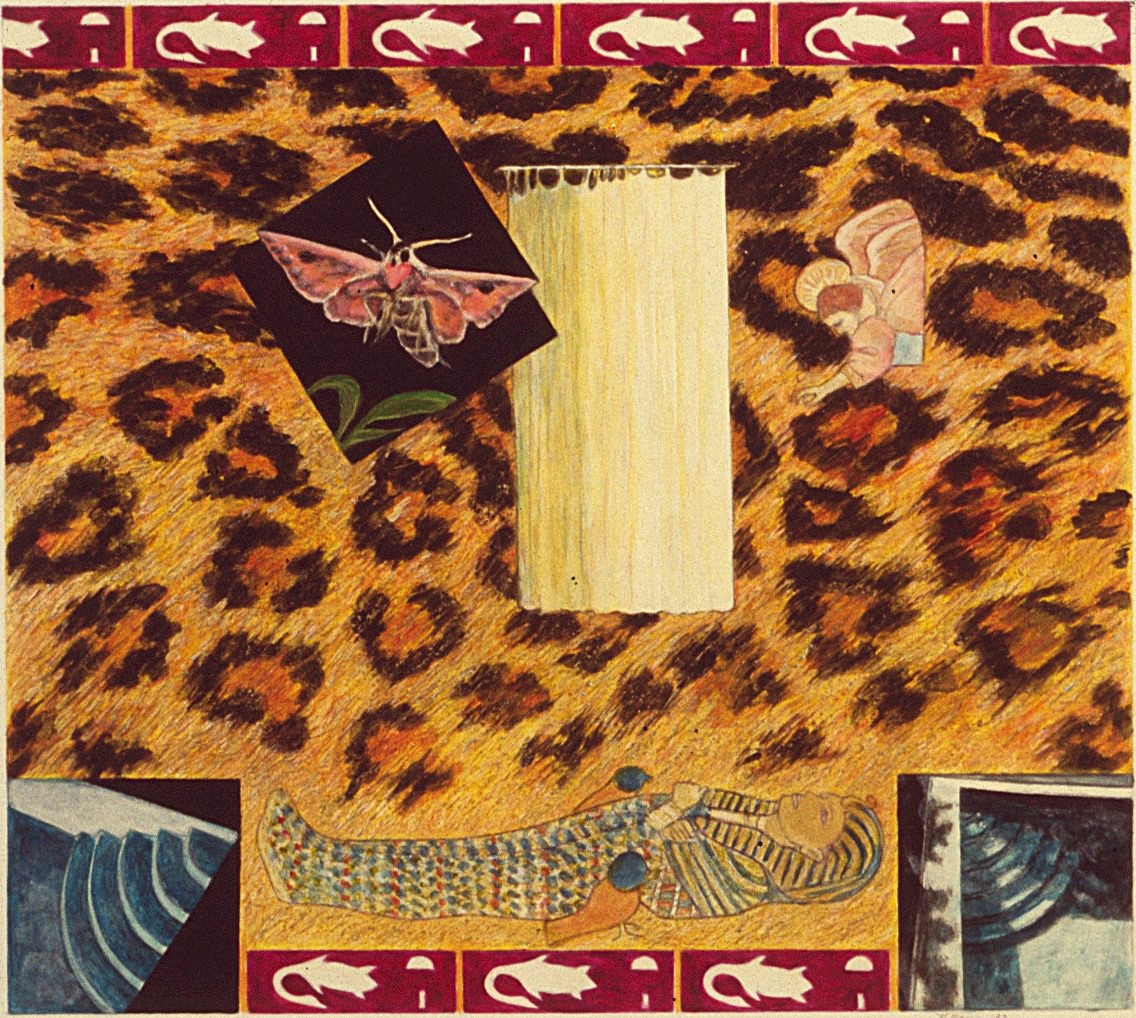
Acrylic on paper (1994)

Size (not documented, work now in private collection)

Another in my series Breast Cancer: A Progress. This is what I wrote in 1994:

“Treatment for breast cancer is for many women a nightmare. They feel powerless, dependent on the good will and expertise of the medical profession. Surgery and radiotherapy are the methods used to eradicate the “primary” cancer (the breast lump itself). While undergoing both kinds of treatments, the woman is necessarily immobilized. Removal of the cancerous mass by the surgical knife is at least easily comprehensible; radiotherapy however is mysterious and frightening, for the woman must descend below ground level where the powerful and dangerous machines are kept in thick-walled vaults.

Sources/Acknowledgements:

Recumbent figure: Model/coffin of Tutankhamen, flanked by falcon and human-headed bird (Egyptian, 14th century BC)

Angel at the window, white curtain: Giotto (Italy, 14th century), “Vision of Anna”

Moth: Stephen Dalton, photograph of Lepidoptera (Spurge Hawk, sphinx) in Borne on the Wind: The Extraordinary World of Insects in Flight

Leopard fur: Robert Vavra, photograph in I Love Nature More

Goose emblem: Egyptian hieroglyph for fear

Stairs: David Hockney, preparatory Polaroid photographs for “Paper Pools” series”
Ollie in Gaza

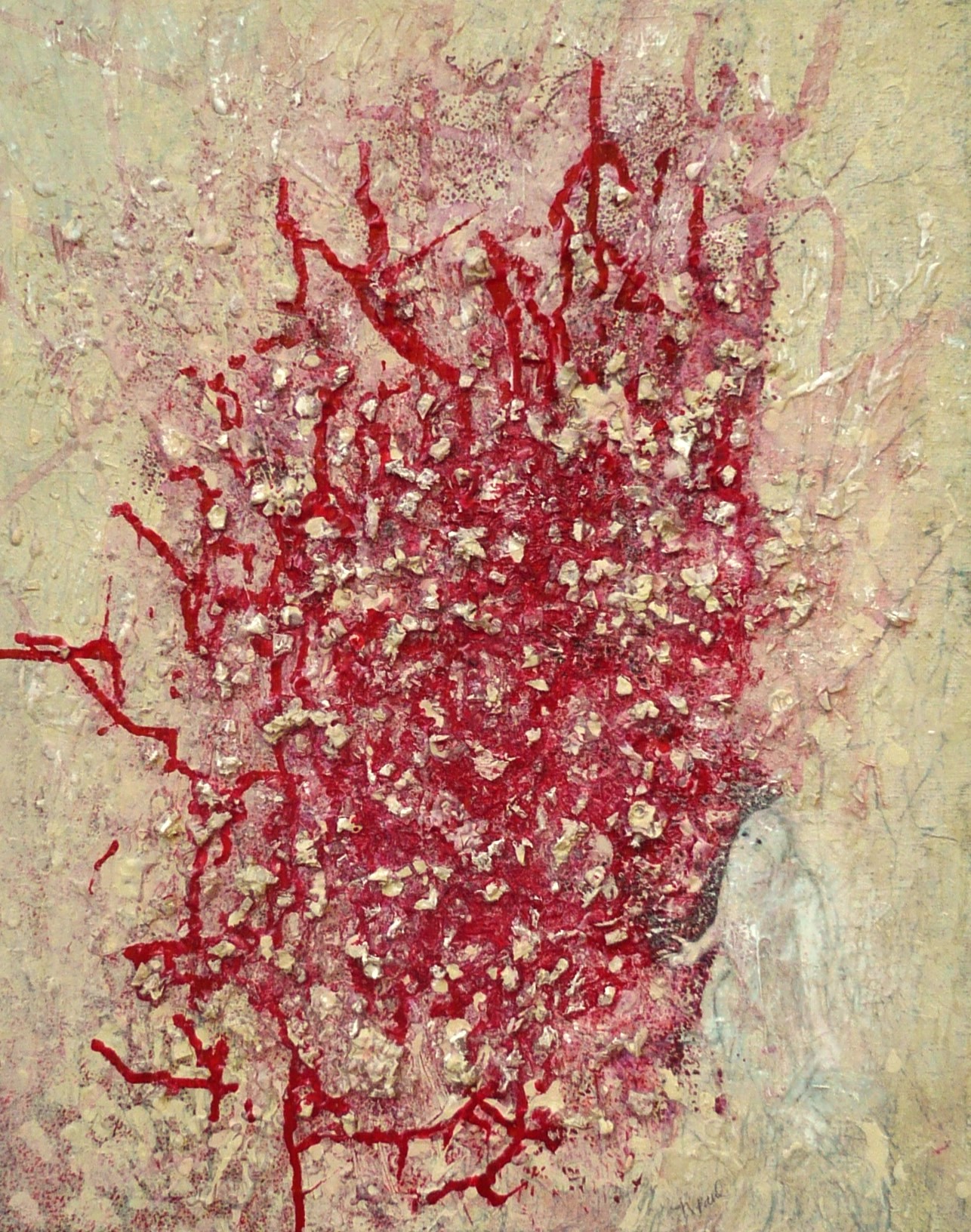
Acrylic, ink, re-harvested PETE plastic on linen (2024)

This piece is now finished. It will be exhibited in Kingston for the month of November (Window Gallery) as part of the OKWA (Organization of Kingston Women Artists) annual show. Here is the statement I wrote in response to the show’s theme, Change:

“Ollie the orangutan was photographed in 1988 for a book about endangered species.  In my painting he is bewildered, palms up in despair, bearing witness to the death and destruction in Gaza over the past year.  This artwork itself has seen much change, originally a dense network of red dots but layer by layer overlaid with paint and buried in plastic rubble, symbolizing the tens of thousands of individual lives lost.  If he is still alive, Ollie is 42 years old.  I show him fading from our view just as these magnificent creatures are vanishing from the world, approaching extinction.”

Ollie in Gaza (Work in Progress)

Acrylic and ink on canvas (2024)

Size: w 16 ” x h 20″ x d 1″

Ollie the orangutan was photographed by James Balog at Marine World Africa in California in 1988. In captivity, an orangutan can sometimes live into their late 50s. If he is still alive, Ollie is 42 years old.

Holding My Broken Heart Aloft

Water soluble crayon/pencil and graphite on paper (1990)

Size: w 13″ x h 25″

This is what I wrote in 1990 about this piece:

Like the photographer James Balog who photographed the 15-month-old Atlantic green turtle on its back, I too am “continually mesmerized by this image of delicate sensibility.” Balog tells us in his new book, Survivors: A New Vision of Endangered Wildlife, that the species is on the verge of extinction following systematic exploitation for meat, eggs, and oil. This picture is about vulnerability, and also about the awareness of incalculable suffering which surrounds and drowns each of us like a heavy sea. The turtle yearns to extend herself, to reach beyond her own separateness. The Scythian mirror, a relic from the sixth century BC, is symbolic of her vain, broken effort.

Into White (II) Extinction

Acrylic, handmade paper, ink on cradled birch panel (2023)

Size: w 16″ x h 12″ x d 1.5″

Part II of Triptych Into White (I, II, III: Destruction, Extinction, Disintegration)

Extinction

Extinction is the complete disappearance of a species from earth (National Geographic Society).

Extinction: A situation in which something no longer exists (Cambridge Dictionary).

Nereids and the Ruby Sea Dragon (Detail of Work in Progress)

Acrylic and Japanese paper on canvas (started 2021, still in progress 2023)

Size: w 22″ x h 28″ x d 2″

Yet another detail, this time of one of my two Nereids. Progress is slow over the summer months but I can see the way to the end (I think).

Lost Friend: Northern White Rhino

Acrylic and pastel on cradled birch panel (2023)

Size: w 18″ x h 24″ x d 1.5″

Sudan, the last male northern white rhino, died 19 March 2018. His daughter and granddaughter, Najin and Fatu, are still living, but the subspecies is considered “functionally extinct” as it is no longer viable. I mourn the passing of this great creature with this painting and also the one posted in March (Leaving Eden) https://npaulartworks.com/2023/03/13/leaving-eden-nereids-and-the-northern-white-rhino/

Leaving Eden: Nereids and the Northern White Rhino

Acrylic, ink, Japanese paper on cradled birch panel (2023)

Size: w 24″ x h 12″ x d 1.5″

The Northern White Rhino is on the verge of extinction but efforts to engineer the revival of the species are generating excitement. According to The Guardian (Dec2022): “Scientists who collected semen and eggs from the last living members of the rhino species hope to be able to implant embryos into a cousin of the northern white rhino as part of nascent repopulation efforts which, if successful, would be unprecedented.”

Dreaming My Dissolution (Detail)

Acrylic, Japanese paper, gold leaf on canvas (2020)

Size: w 28 x h 40 x d 1.75 inches

This piece is also known as Sea Change (Fall Rich and Strange) — June 2020 for the full image. That title still holds, but when I looked at the painting this morning the words came to me. The new title is dark, but perhaps letting out the dark allows the light to come in.

Lost Spirit

Coloured gesso, acrylic, graphite, ink on canvas (2022)

Size: w 14″ x h 20″ x d 1.5″

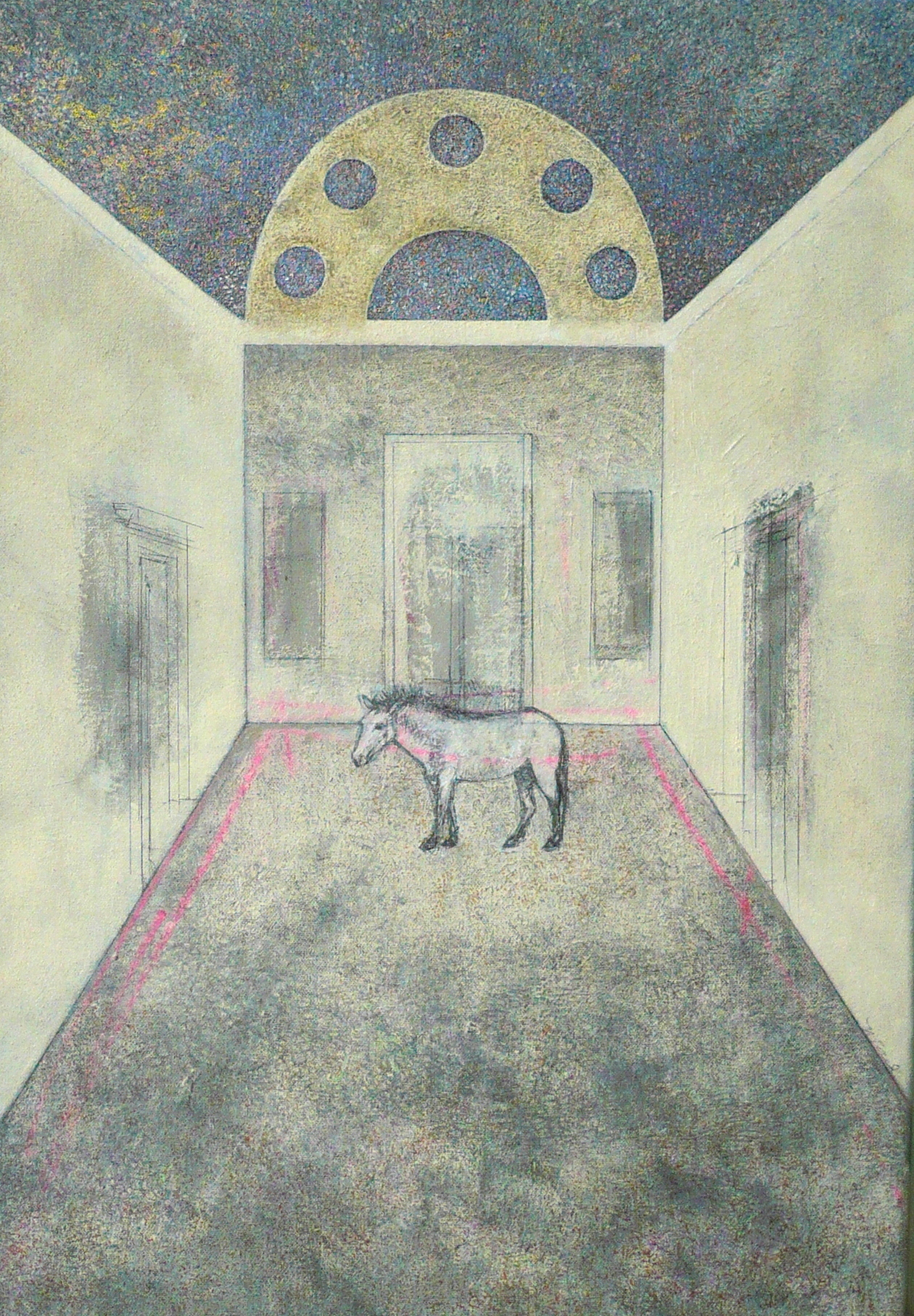
“Przewalski’s horse” is the only truly wild horse in existence. Other horses thought of as wild are in fact feral, according to The Smithsonian. For many years it was extinct in the wild, surviving only in zoos and field stations; its population was at long last successfully reintroduced in the 1990s to its native Mongolia where it is regarded as holy and known as the takhi (meaning spirit, worthy of worship). I picture the takhi roaming from room to room in Palladio’s Villa Poiana, lost between heaven and earth. The image arose from the confluence of two dreams I had 15 years apart, the most recent just a few weeks ago.