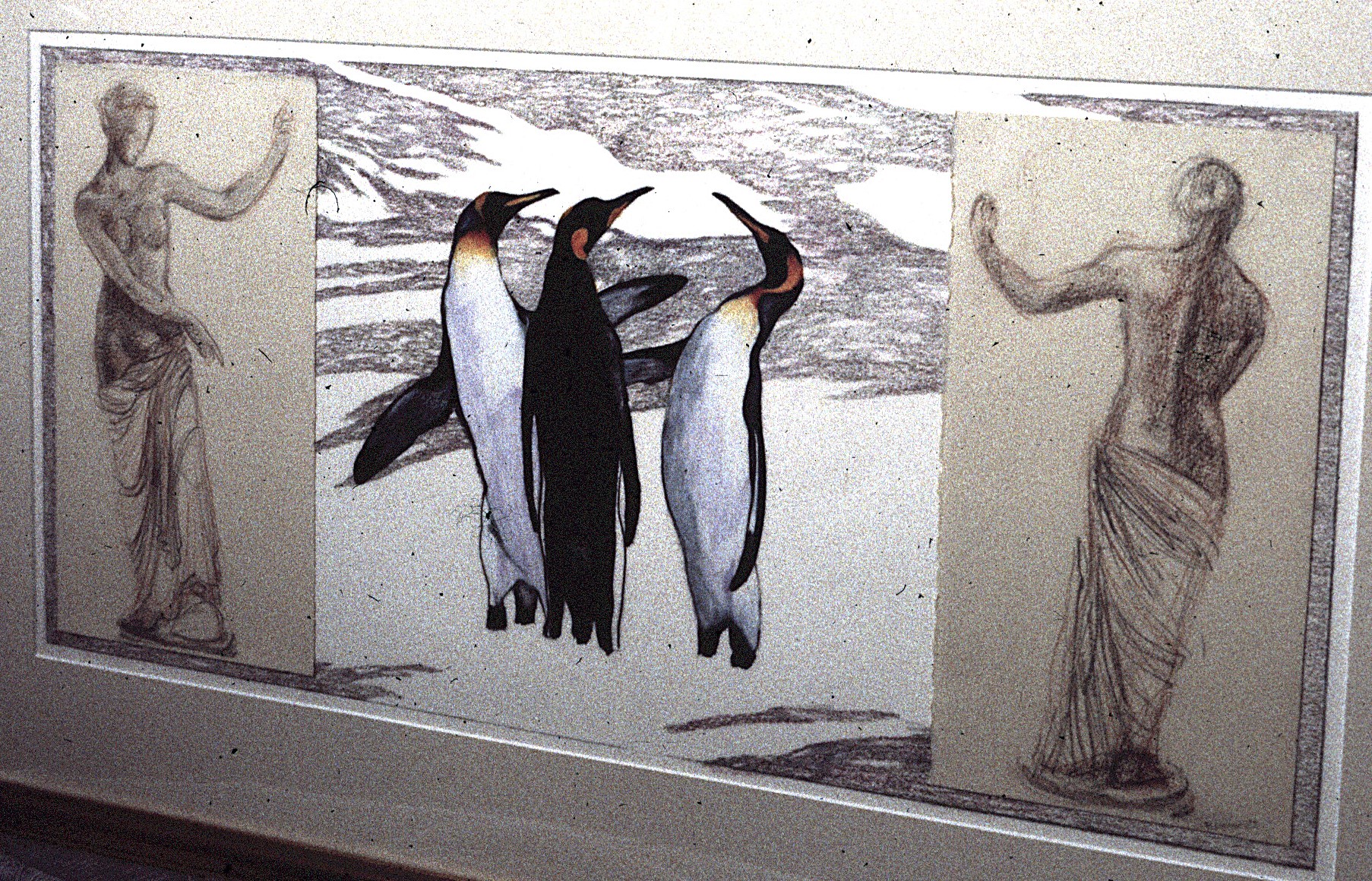
Coloured pencil and acrylic on paper (1989)
Size unknown. In private collection (apologies for the angled shot of a framed piece, not to mention the old speckled slide).

Coloured pencil and acrylic on paper (1989)
Size unknown. In private collection (apologies for the angled shot of a framed piece, not to mention the old speckled slide).
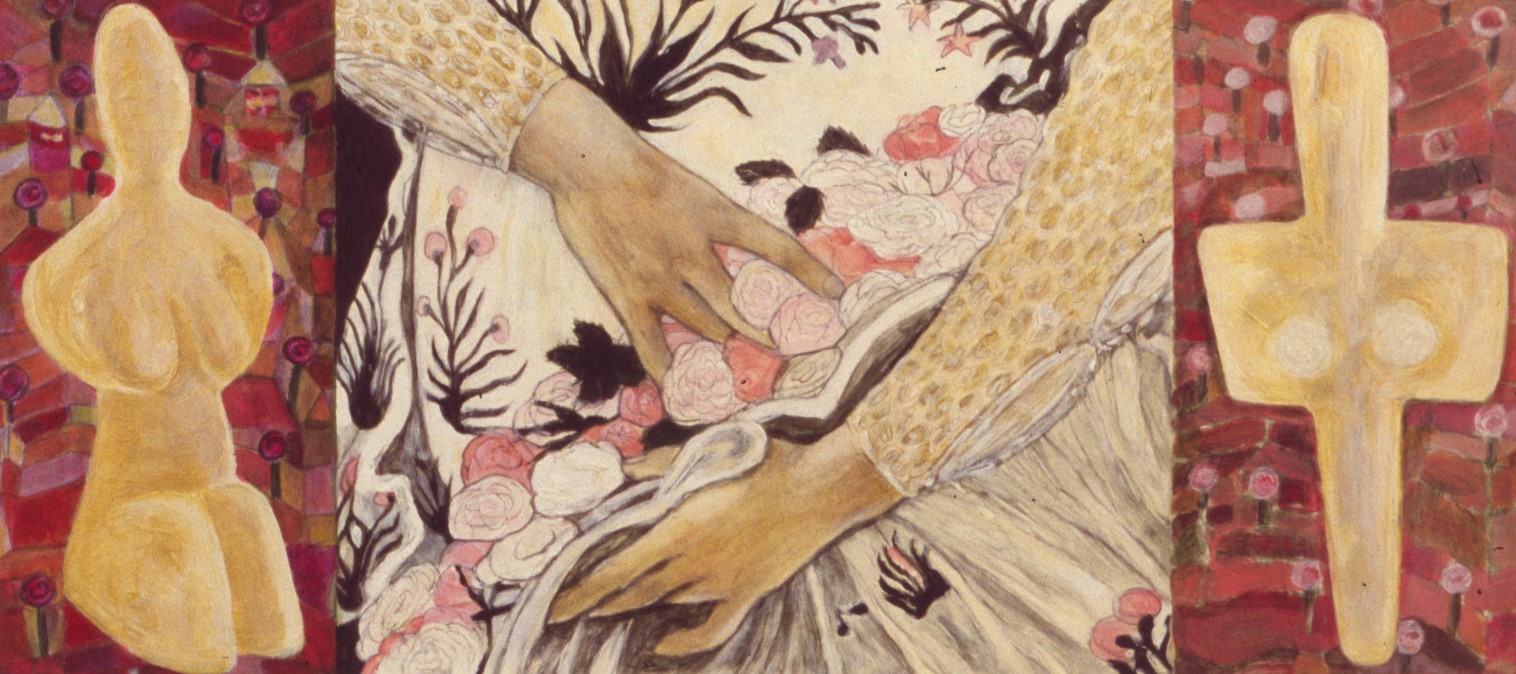
Acrylic on paper (1994)
Size (not documented, work now in private collection)
This painting was included in my series Breast Cancer: A Progress, though it is not about breast cancer at all but is simply a celebration of women. As I wrote at the time, it was included in the series to remind us of what we are fighting for against this devastating disease.
I provided the following background information for the show at Art Noise Gallery, Kingston, 1994.
Sources/Acknowledgements:
Centre panel: Botticelli (Italian, 15th century), Primavera (detail: lap of Flora)
Side panels, figures: Goddess figures from ancient cultures
Side panels, backgrounds: Paul Klee (Swiss, 20th century), Jardin de Roses
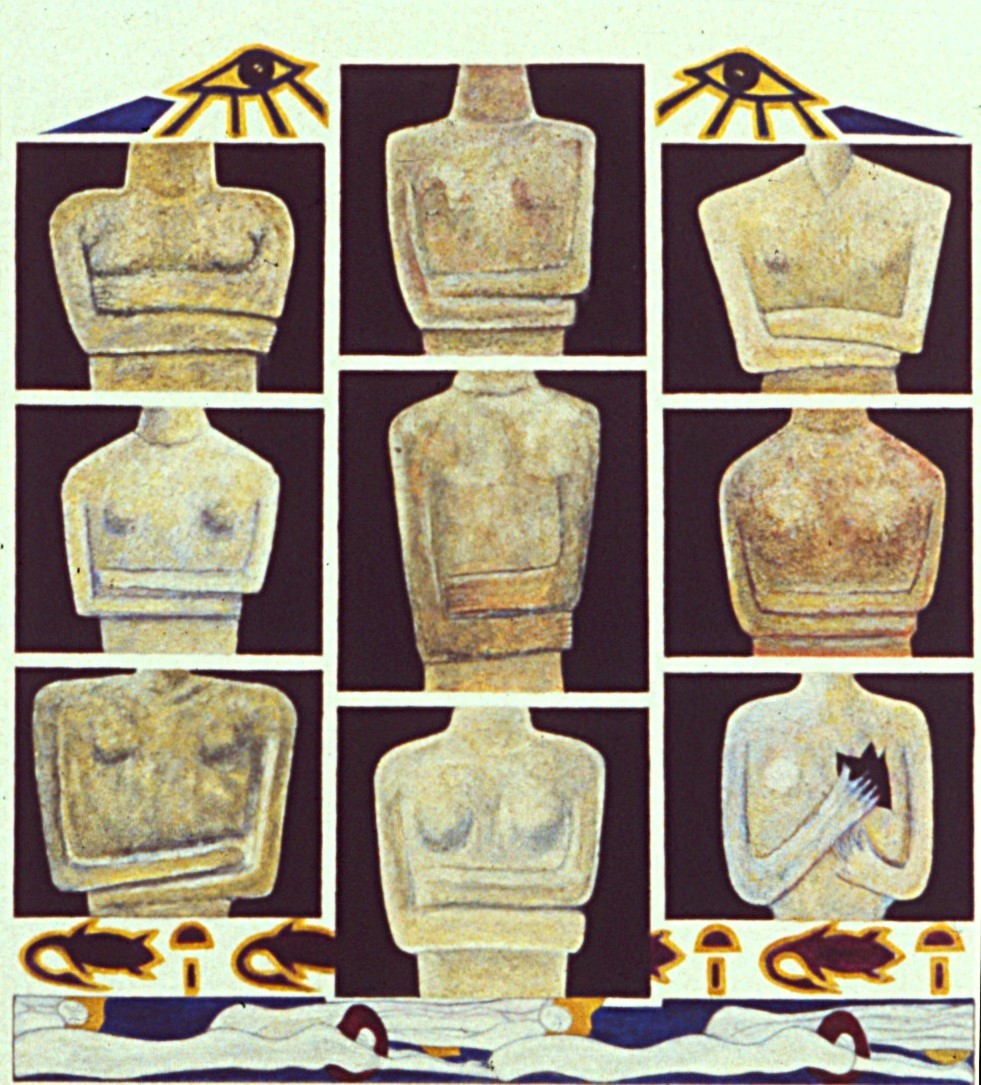
Acrylic on paper (1993)
In the early 1990s I created a series of eight paintings, exhibited in 1994 at the Art Noise Gallery in Kingston. Breast Cancer: A Progress was meant to follow in the tradition of the formal, symbol-laden compositions in sequence used by Christian and other cultures to inspire contemplation, to bring the soul of the viewer to a state of spiritual readiness for understanding. I was particularly inspired by Giotto’s commemoration of the events in the lives of Jesus Christ and Mary, his mother.
To view the full series of paintings, see my new page, Breast Cancer: A Progress (currently under construction). I apologize for the quality of the image; I am working from old slides and negatives of these works, as the originals were donated after the exhibit to the Canadian Cancer Society. My understanding is that they were given by the CCS to some of their major donors for their private collections (see CV page, Collections).
This painting is the first in the sequence, titled Breast Cancer: Incidence. The phrase “one in nine” encapsulated in 1990 for many women their fear of the rising incidence of breast cancer. See my new page Part II: 1990-2010 for an explanatory paragraph, including Sources and Acknowledgements, I wrote about this piece back in 1992.
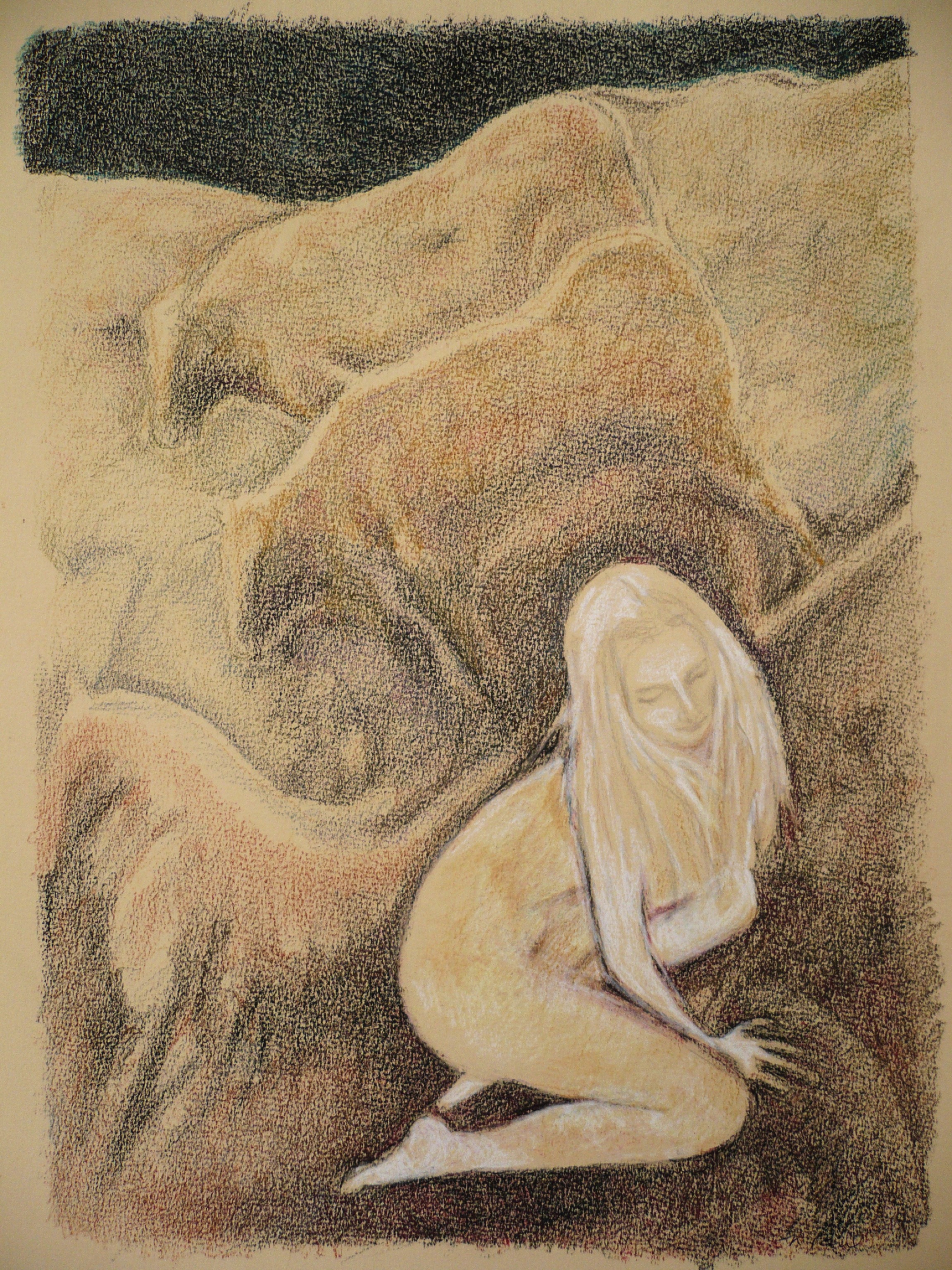
Conte on paper (1989)
This drawing was originally titled Under the Hill, after East Coker by T S Eliot.
“The houses are all gone under the sea.
The dancers are all gone under the hill.”
I said in 1989 that the image is about death and rebirth, about the passage of time and the rhythm of generations; that it also has to do with the elemental part of ourselves which we discover, recognize, only in times of extremity.
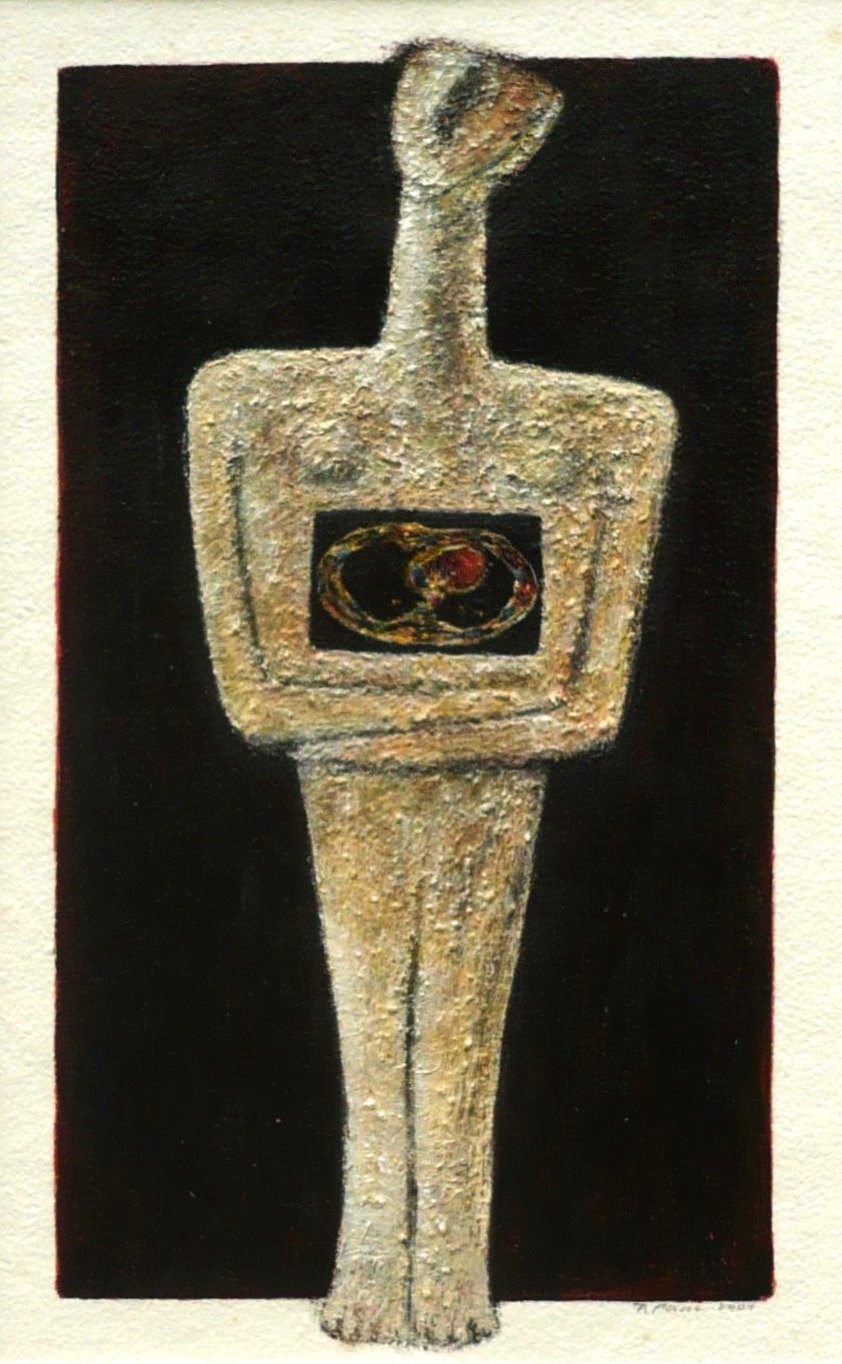
Acrylic on paper (2004)
Size: w 12″ x h 19″
“Between 2700 and 2400 B.C., roughly contemporaneously with Old Kingdom Egypt, craftsmen in the Cycladic Islands of Greece sculpted female nudes in marble whose elegance and simplicity was not to be seen again in art until the work of Brancusi and Modigliani.” (From The Cycladic Spirit, Masterpieces from the Nicholas P. Goulandris Collection, by Colin Renfrew with Introduction by Christos Doumas, 1991). Hard to argue with that statement. The folded-arm figures in this magnificent book were photographed by John Bigelow Taylor. For this painting I chose to work from one of Taylor’s photographs of the Chalandriani variety, a figure with squared off shoulders and a long cylindrical neck. The black box inserted into the figure’s chest is my addition of course, a CT scan image of the heart.

Acrylic and graphite on paper, mounted on canvas (est late 1990s)
Size: w 16″ x h 10″ x d 1.75″
Many years ago, years before she died in 2007, my mother asked me to illustrate her poem for children about a dragon coming to visit (actually to stay indefinitely) uninvited. The dragon represented to her the crippling, painful illness which had changed her life dramatically; she was diagnosed with rheumatoid arthritis at the age of 59.
My mother herself created lively pen and ink drawings for the poem and in the end my detailed, somewhat fastidious, paintings were not what she had envisioned. The project eventually stuttered but in the meantime I put together a sequence of images to go with the several verses. I have decided now to “publish” them on this blog (a new page yet to be set up) alongside the text of my mother’s poem.
The painting featured here is the first in the sequence. The first verse of “A Dragon Has Come To My House” by Pauline Johnson goes as follows:
A dragon has come to our house
He’s come to stay
He’s found that creepy corner,
In the basement, eh!
The corner where the sump pump
Sits in a pail of goo
And he says he isn’t leaving
Whatever shall I do?
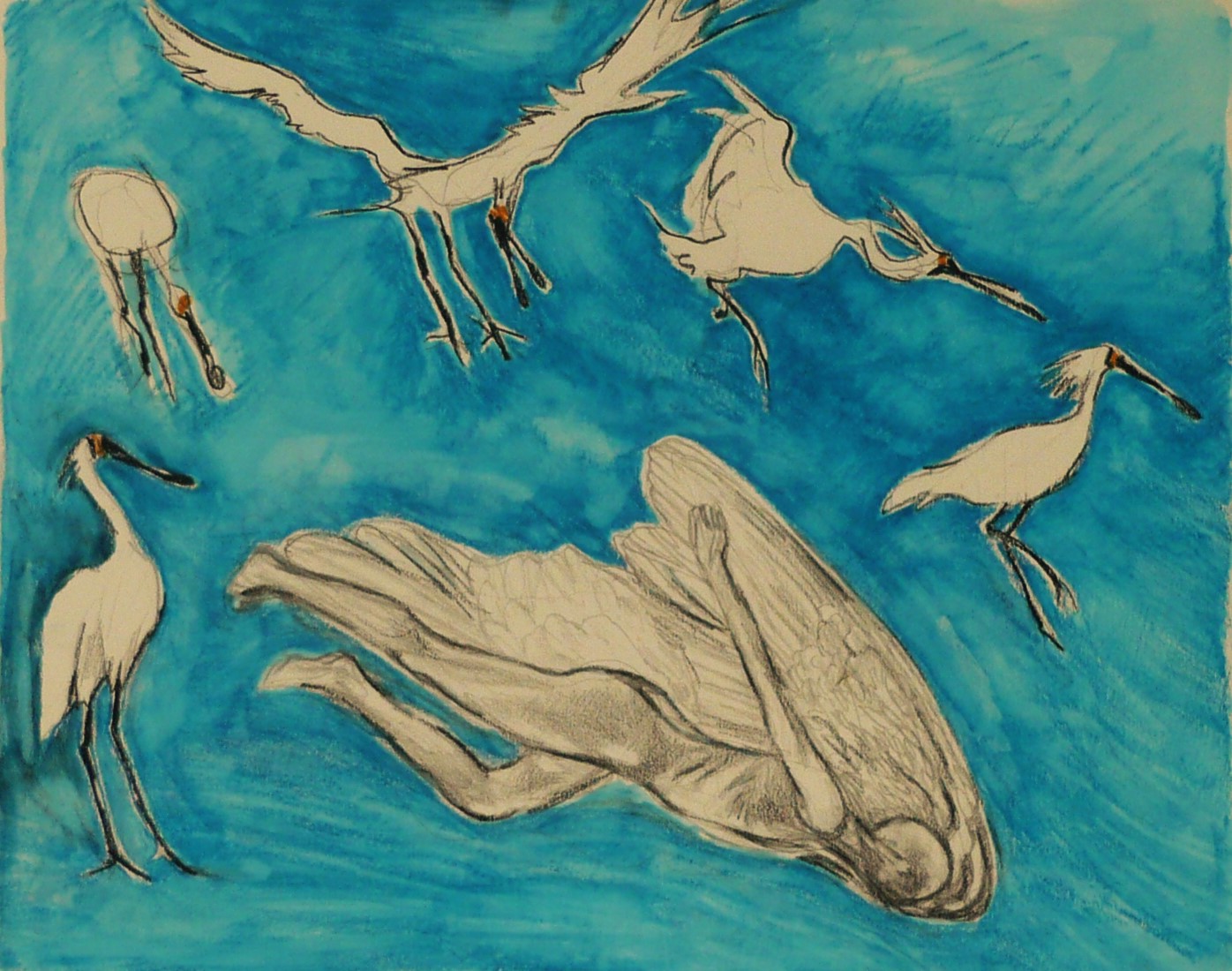
Acrylic, graphite, crayon on paper (date unknown, est. between 1990 and 2005)
Size: w 20″ x h 16″


Conte on paper mounted on cradled birch panel (2022)
Size: w 12″ x h 12″ x d 1.5″ (x two pieces, diptych)
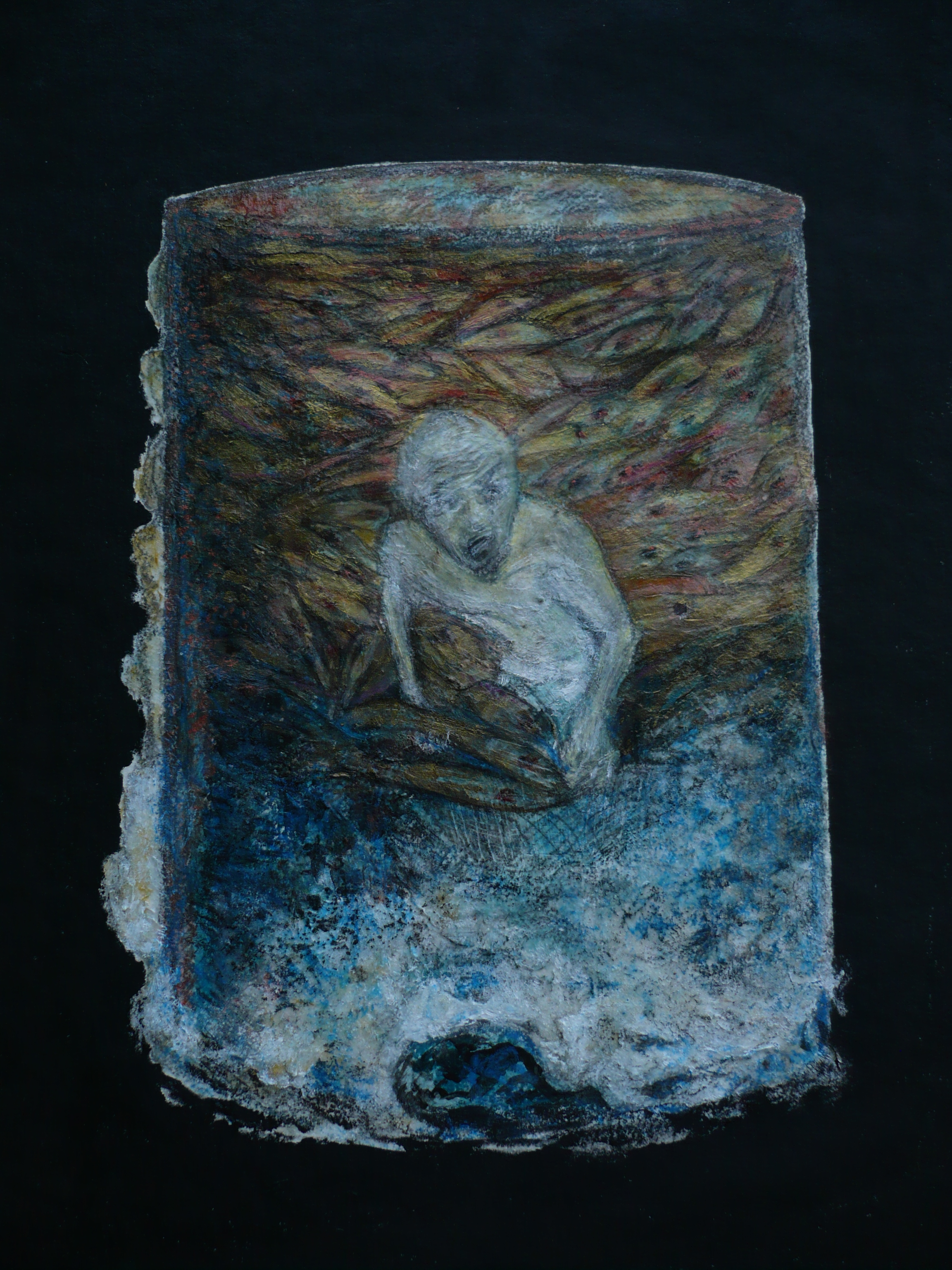
Acrylic on paper (2009)
Size: w 13″ x h 17″
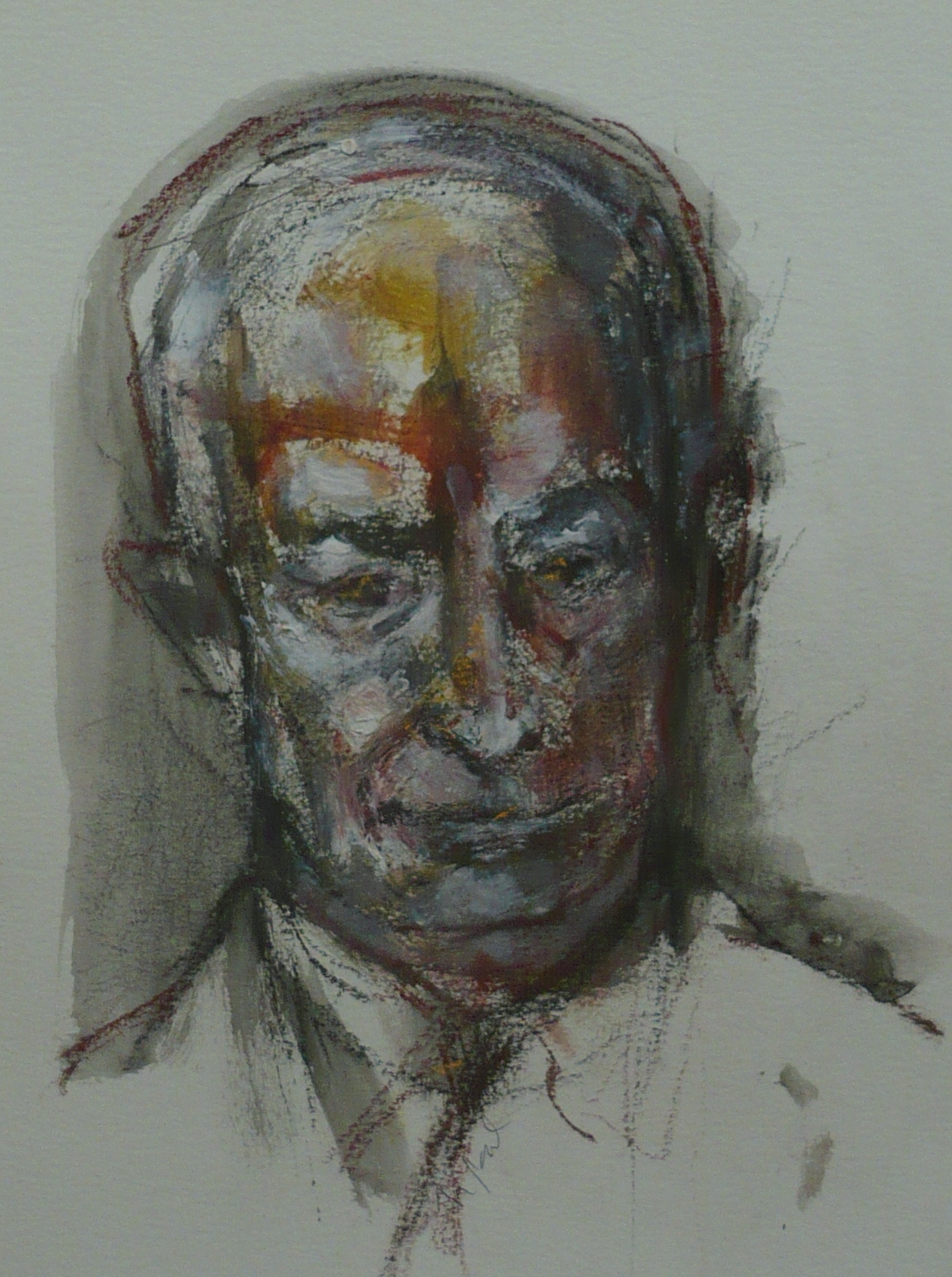
Acrylic, pastel, conte on paper (2020)
Size: w 9″ x h 12″
Based on the 1936 portrait of A Y Jackson by Lilias Torrance Newton.
 npaulartworks